Catalog
From emergency response fleets to heavy construction machinery, LED Warning Lights have become the universal language of visual safety on roads and job sites. This article explores how these lighting systems function, what makes them superior to traditional technologies, and why they are indispensable across dozens of vehicle categories. It covers technical standards, color meanings, mounting types, selection criteria, and answers the most frequently asked questions about modern warning illumination.
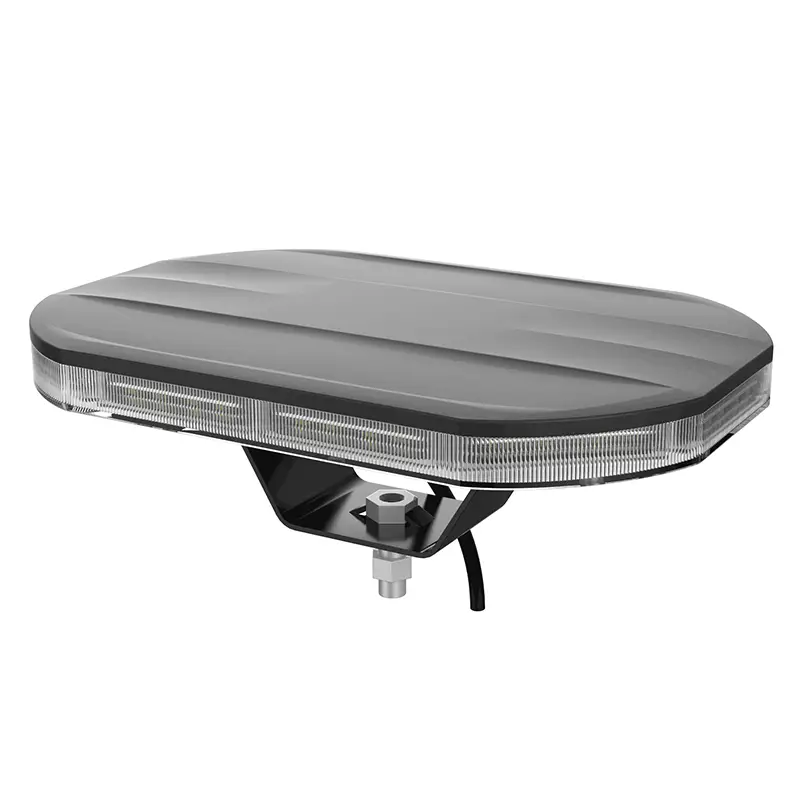
Table of Contents
The Evolution of Warning Illumination
For decades, vehicle warning systems relied on rotating halogen beacons and xenon strobe tubes. These technologies served their purpose, but they came with significant drawbacks: high power consumption, fragile moving parts, and limited lifespan. The introduction of LED Warning Lights transformed the landscape entirely. Solid-state lighting offered a path to brighter, more reliable, and more energy-efficient warning signals that could be tailored to virtually any vehicle type or operating condition.
Today, LED Warning Lights are not merely an option but a standard expectation in fleet management, emergency services, and commercial transportation. Their ability to produce intense, focused beams with minimal electrical draw has made them the preferred choice for original equipment manufacturers and aftermarket installers alike. The shift from mechanical to electronic illumination has also opened the door to programmable flash patterns, synchronization across multiple units, and smart dimming features that adapt to ambient light conditions.
What makes this technology truly revolutionary is not just the brightness but the control. Modern warning systems can produce dozens of distinct flash sequences, from single pulses to complex alternating patterns, all without mechanical wear. This flexibility allows fleet operators to standardize on a single product family while customizing the visual output for different roles—emergency response, roadside assistance, or construction site perimeter marking.
The global push for vehicle safety has further accelerated adoption. Regulatory bodies in Europe, North America, and other regions have established stringent photometric standards that LED systems can meet more readily than older technologies. As a result, LED Warning Lights have become the common thread connecting safety protocols across borders and industries.
Technical Standards That Define Quality
Not all warning lights are created equal. The difference between a reliable safety device and a decorative accessory often comes down to certification. Two of the most recognized benchmarks in the industry are ECE R65 and SAE J845. These standards specify minimum luminous intensity, flash rates, and durability requirements for warning devices used on public roads.
ECE R65, enforced across European and many international markets, classifies warning beacons into Class 1 and Class 2 based on their light output. Class 1 represents the highest intensity level, typically required for emergency vehicles that need to be seen from long distances at high speeds. SAE J845, used primarily in North America, similarly defines performance tiers that ensure visibility under various weather and lighting conditions.
Beyond these primary standards, additional certifications such as ECE R10 address electromagnetic compatibility, ensuring that warning lights do not interfere with other vehicle electronics. IP ratings like IP67 or IP69K indicate protection against dust and water ingress, which is critical for equipment exposed to rain, mud, or high-pressure washing.
For fleet managers and safety officers, understanding these standards is not optional. Specifying lights that meet or exceed regulatory requirements ensures legal compliance, reduces liability, and—most importantly—protects the people who depend on those signals to stay safe. The table below summarizes the key standards and what they mean for end users.
| Standard | Region | Key Requirement | Typical Application |
|---|---|---|---|
| ECE R65 Class 1 | Europe / International | High-intensity warning signal | Emergency vehicles, heavy trucks |
| ECE R65 Class 2 | Europe / International | Medium-intensity warning signal | Utility vehicles, tow trucks |
| SAE J845 Class 1 | North America | High-intensity warning signal | Police, fire, ambulance |
| ECE R10 | Europe / International | Electromagnetic compatibility | All vehicle-mounted electronics |
| IP67 / IP69K | Global | Dust-tight / waterproof | Off-road, agricultural, marine |
Certifications are not just paperwork; they represent real-world testing under controlled conditions. Photometric tests measure candela output at specific angles. Vibration tests simulate rough terrain. Corrosion tests evaluate resistance to salt spray and chemicals. Products that pass these tests earn the right to display the certification marks that buyers trust.
Decoding the Color Spectrum
Color is the first thing that catches the eye, and in warning lighting, every hue carries a specific meaning. While LED Warning Lights are available in a broad palette, certain colors are reserved for particular vehicle types and situations to avoid confusion on the road.
Red is universally associated with emergency vehicles—police, fire, and ambulance services. Its high visibility and psychological association with danger make it the default choice for urgent response. Blue, while also used in emergency contexts, is more common in certain regions for law enforcement and is often paired with red in lightbar configurations. Amber (or yellow) signals caution and is the standard for construction vehicles, tow trucks, utility fleets, and roadside maintenance crews. It indicates a need for other drivers to slow down or change course without implying an emergency.
White and clear lenses are often used for scene lighting or as auxiliary warning signals, while green may indicate safety or command vehicles in some jurisdictions. The choice of color is not merely aesthetic; it is governed by local regulations that specify which colors can be used on which vehicle types. Violating these rules can result in fines and, more critically, miscommunication that leads to accidents.
Modern LED systems also allow for dual-color or multi-color configurations within a single housing. This feature enables a vehicle to switch between warning modes—for example, from amber to red when transitioning from a work site to an emergency response. Such versatility adds operational value without requiring multiple light fixtures.
LED Technology vs. Traditional Strobes
The transition from xenon strobe to LED has been one of the most significant shifts in the warning light industry. Early LED units sometimes fell short of the raw output of xenon tubes, but that gap has closed—and in many cases, reversed. Modern high-power LEDs can produce effective intensities exceeding 300 candela, surpassing the 120-candela output of a typical 5-joule xenon strobe.
Beyond brightness, the advantages of LED are numerous. Power consumption is dramatically lower—LEDs use roughly 25% to 35% of the power required by gas discharge strobes or halogen lamps. This efficiency translates to less strain on vehicle electrical systems, longer battery life during stationary operation, and the ability to run more lights from the same power source.
Durability is another decisive factor. LED warning lights have no filaments, no glass tubes, and no moving parts. They are inherently resistant to shock and vibration, which makes them ideal for off-road vehicles, construction equipment, and emergency response units that operate in demanding environments. Service life typically exceeds 50,000 hours, and many units are rated for 70,000 hours or more—compared to a few thousand hours for halogen bulbs.
The table below highlights the key differences between LED and traditional strobe technologies.
| Feature | LED Warning Lights | Xenon Strobe / Halogen |
|---|---|---|
| Power consumption | Low (25-35% of strobe) | High |
| Service life | 50,000+ hours | 2,000-5,000 hours |
| Moving parts | None | Rotating reflectors / filaments |
| Shock resistance | Excellent | Poor to moderate |
| Flash patterns | Dozens programmable | Limited |
| Heat generation | Low | High |
| Instant on/off | Yes | Warm-up delay (strobe) |
These technical advantages have made LED the default choice for new vehicle builds and retrofits alike. The total cost of ownership is lower, reliability is higher, and the flexibility to adapt to changing safety requirements is unmatched.
Mounting Configurations and Form Factors
LED Warning Lights are available in a wide array of form factors, each designed for specific mounting locations and visibility requirements. The choice of configuration affects not only the visual impact but also the aerodynamic profile, installation complexity, and overall vehicle aesthetics.
Lightbars are the most recognizable form, typically mounted on vehicle roofs. They provide 360-degree visibility and can accommodate multiple colors and flash patterns within a single housing. Mini lightbars offer a lower profile for vehicles where full-size bars may be impractical or undesirable.
Surface-mount lights are compact units that attach directly to vehicle bodies, grilles, or bumpers. They are ideal for adding warning capability to existing vehicles without major modifications. Hideaway or covert lights are designed to be discreet, often installed behind grilles or inside headlight housings for undercover or unmarked vehicles.
Beacon-style lights are the classic rotating or flashing dome lights seen on construction equipment and service vehicles. Modern LED beacons simulate the rotating effect electronically, eliminating mechanical wear while maintaining the familiar visual cue that drivers instinctively recognize.
Each mounting type has its trade-offs. Roof-mounted lightbars offer maximum visibility but increase wind resistance and may require drilling. Surface-mount units are easier to install but may have more limited angles of coverage. The selection should be based on the vehicle's primary operating environment, the required warning range, and any regulatory constraints on light placement.
Application Across Vehicle Types
The versatility of LED Warning Lights means they are found on virtually every category of vehicle that operates in public or shared spaces. Each application has unique requirements that influence the choice of color, intensity, and mounting.
Emergency vehicles—police, fire, and ambulance—demand the highest intensity and most attention-grabbing patterns. These vehicles often use multi-color lightbars with red, blue, and white LEDs, synchronized to create powerful visual signatures that can be seen from over a kilometer away.
Construction and heavy equipment rely on amber warning lights to alert workers and passing motorists to the presence of large, slow-moving machinery. These lights must be rugged enough to withstand dust, debris, and vibration while maintaining consistent performance throughout long work shifts.
Utility and service fleets—including tow trucks, roadside assistance, and maintenance vehicles—use warning lights to create a safety perimeter around work zones. The ability to program flash patterns that differentiate between moving and stationary operations adds an extra layer of communication.
Agricultural and forestry machinery often operates in remote areas with limited visibility. High-intensity amber beacons and strobes ensure that these vehicles are seen by other operators and by aircraft conducting aerial surveys or crop dusting. Marine applications require waterproof and corrosion-resistant lights that can withstand saltwater exposure.
The common thread across all these applications is the need for reliability. A warning light that fails at a critical moment can have serious consequences. This is why quality-conscious operators choose products that are built to last and certified to the highest applicable standards.
Durability and Environmental Resilience
Warning lights are exposed to some of the harshest conditions imaginable. They endure extreme temperatures, from desert heat to arctic cold. They face relentless UV radiation, road salt, chemical sprays, and physical impacts from debris. LED Warning Lights are engineered to survive these challenges.
High-quality LED warning lights use polycarbonate lenses that are impact-resistant and UV-stabilized to prevent yellowing or cracking over time. Housings are typically made from corrosion-resistant materials such as die-cast aluminum or reinforced plastics. Sealing techniques, including gaskets and sonic welding, ensure that moisture and dust cannot penetrate the internal electronics.
IP ratings provide a clear indication of a light's environmental protection. IP67 means the unit is dust-tight and can withstand immersion in water up to 1 meter for 30 minutes. IP69K, a more demanding rating, indicates resistance to high-pressure, high-temperature water jets—essential for vehicles that undergo frequent power washing.
Temperature tolerance is another critical factor. Premium warning lights are designed to operate in ranges from -40°C to +85°C, ensuring functionality in everything from Siberian winters to Middle Eastern summers. This wide operating window is achieved through careful component selection and thermal management design that dissipates heat without compromising the seal.
For fleet operators, durability translates directly to uptime. Lights that fail less often mean fewer replacements, less downtime, and lower maintenance costs. More importantly, they mean that the warning system is always ready when it is needed most.
Selection Criteria for Buyers
Choosing the right LED Warning Lights for a vehicle or fleet requires a systematic approach. The following criteria should be evaluated before making a purchase decision.
Regulatory compliance is the starting point. Determine which standards apply to the vehicle's operating region and ensure that the selected lights carry the appropriate certifications. Non-compliant lights can lead to legal penalties and may not provide adequate warning in critical situations.
Visibility requirements depend on the operating environment. Vehicles that travel at high speeds on highways need lights with higher intensity and wider angles than those used in low-speed urban settings. Consider the ambient light conditions as well—lights that are visible in bright sunlight may be overpowering at night, so dimming or multi-mode functionality is valuable.
Mounting and integration should be planned in advance. Measure available space, consider the vehicle's existing electrical system, and evaluate whether surface-mount, flush-mount, or lightbar configurations are most appropriate. Synchronization capability is another factor—being able to coordinate multiple lights to flash in unison creates a more professional and effective warning signal.
Durability and warranty are indicators of manufacturer confidence. Look for products with robust environmental ratings and comprehensive warranties that cover both materials and workmanship. A longer warranty often correlates with higher build quality.
Finally, consider the total cost of ownership over the expected service life. While upfront costs matter, a slightly more expensive light that lasts three times as long and uses half the power is often the better investment. The table below summarizes the key selection criteria.
| Selection Criterion | What to Look For | Why It Matters |
|---|---|---|
| Certifications | ECE R65, SAE J845, R10, IP67/69K | Legal compliance and performance assurance |
| Intensity | Class 1 for emergency, Class 2 for utility | Visibility at distance and in adverse weather |
| Flash patterns | Multiple programmable patterns | Adaptability to different scenarios |
| Mounting type | Surface, flush, lightbar, beacon | Fitment and coverage angle |
| Durability | IP67+, polycarbonate lens, aluminum housing | Longevity in harsh environments |
| Warranty | 3+ years comprehensive coverage | Manufacturer confidence and support |
Frequently Asked Questions
Class 1 represents the highest luminous intensity level, typically required for emergency vehicles that need maximum visibility at high speeds and long distances. Class 2 is a medium-intensity level suitable for utility vehicles, tow trucks, and construction equipment that operate at lower speeds or in more controlled environments. Both classes must meet specific photometric requirements defined by the ECE R65 regulation.
High-quality LED warning lights are rated for 50,000 to 70,000 hours of continuous operation. This translates to approximately 5 to 8 years of 24/7 use, or significantly longer under normal duty cycles. The actual lifespan depends on factors such as operating temperature, voltage stability, and environmental exposure, but LED technology consistently outlasts halogen and xenon alternatives by a wide margin.
Yes. Many modern LED warning lights feature synchronization capability, allowing multiple units to flash in unison or in coordinated alternating patterns. This is typically achieved through a wired connection or wireless communication between controllers. Synchronized flashing creates a more professional appearance and can enhance the warning effect by presenting a unified signal to oncoming traffic.
IP67 is an ingress protection rating that indicates the light is completely dust-tight (6) and can withstand immersion in water up to 1 meter deep for 30 minutes (7). For warning lights, this means they are suitable for use in rainy conditions, wet environments, and during vehicle washing. It is the minimum recommended rating for equipment used in outdoor or harsh conditions.
Legality depends on the vehicle type, the color of the light, and the jurisdiction. Emergency colors (red and blue) are restricted to authorized emergency vehicles in most regions. Amber is generally permitted for utility, construction, and service vehicles. White and green have specific use cases. Always check local regulations before installing warning lights to ensure compliance and avoid fines or liability.
For professional-grade illumination that meets the highest safety standards, explore the full range of LED Warning Lights engineered for durability and performance.
NOVA delivers reliable solutions for fleets worldwide. Contact us to discuss your specific requirements and get expert guidance on the best configuration for your vehicles.