- English
- Español
- Português
- русский
- Français
- 日本語
- Deutsch
- tiếng Việt
- Italiano
- Nederlands
- ภาษาไทย
- Polski
- 한국어
- Svenska
- magyar
- Malay
- বাংলা ভাষার
- Dansk
- Suomi
- हिन्दी
- Pilipino
- Türkçe
- Gaeilge
- العربية
- Indonesia
- Norsk
- تمل
- český
- ελληνικά
- український
- Javanese
- فارسی
- தமிழ்
- తెలుగు
- नेपाली
- Burmese
- български
- ລາວ
- Latine
- Қазақша
- Euskal
- Azərbaycan
- Slovenský jazyk
- Македонски
- Lietuvos
- Eesti Keel
- Română
- Slovenski
- मराठी
- Srpski језик
 Catalog
Which LED Work Lights Fit Your Job Best?
2026-03-05
Article Summary
LED Work Lights are supposed to make your work safer, faster, and less exhausting—but buyers often end up frustrated by glare, weak real-world brightness, water intrusion, flicker, radio interference, or lights that die early from heat and vibration. This guide breaks down the specifications that actually matter on a jobsite (beam pattern, usable lumen output, color temperature, durability ratings, thermal design, and electrical compatibility), then turns that knowledge into a practical selection method you can use for tractors, forklifts, excavators, trucks, and off-road equipment. You’ll also get an installation checklist, a troubleshooting section, and a quick comparison table so you can confidently choose LED Work Lights that perform reliably for years—not weeks.
Table of Contents
- Quick Outline
- What Usually Goes Wrong With LED Work Lights
- The Specs That Actually Predict Performance
- Beam Patterns Explained Without the Marketing Noise
- Durability That Survives Water, Dust, and Vibration
- Power, Wiring, and Electrical Compatibility
- Choosing LED Work Lights by Vehicle and Task
- Quick Comparison Table
- Installation Checklist for Better Light and Longer Life
- Maintenance and Troubleshooting
- Working With a Supplier Who Understands Field Use
- FAQ
- Next Steps
Quick Outline
- Start with the job: what you’re trying to see (near-field, mid-range, or distance).
- Match the beam: flood, spot, combo, or specialized patterns.
- Confirm usable light: not just “raw lumens,” but effective illumination and beam control.
- Buy durability on purpose: water sealing, corrosion resistance, vibration tolerance, and heat management.
- Protect your electrics: correct voltage range, stable driver, and clean wiring.
- Install like a pro: aiming and mounting are half the performance.
What Usually Goes Wrong With LED Work Lights
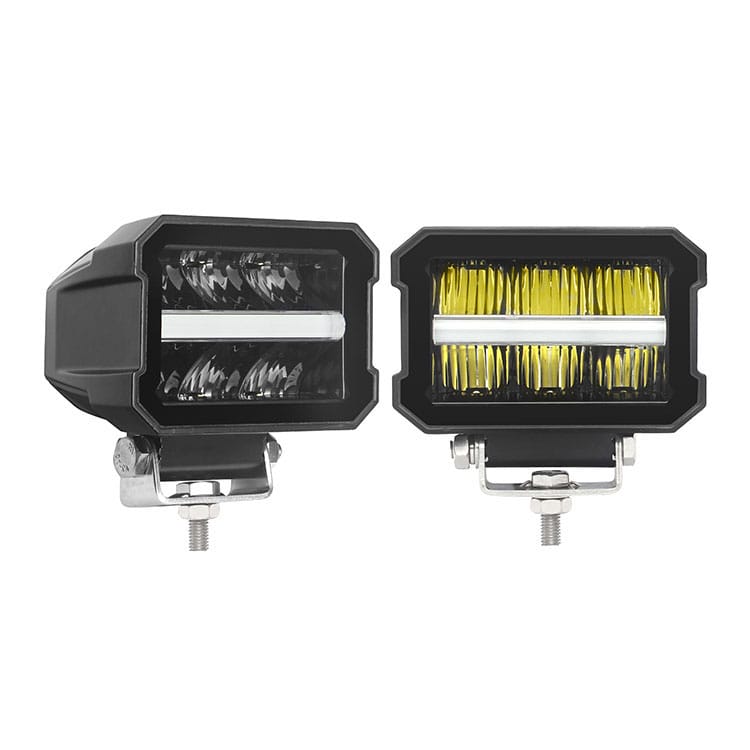
If you’ve ever upgraded to LED Work Lights and thought, “Why does this still feel mediocre?” you’re not alone. The most common pain points come from a mismatch between the light and the real working environment:
- Glare and eye fatigue: A light can be “bright” and still make it harder to work if the beam is uncontrolled or aimed poorly.
- Hot spots and dark zones: A narrow beam may look intense in the center while leaving your actual work area unevenly lit.
- Early failures: Heat kills LEDs slowly and drivers quickly—poor thermal design shortens lifespan.
- Water intrusion: Rain is easy; pressure washing, mud, salt spray, and freeze-thaw cycles are the real tests.
- Vibration damage: Off-road equipment shakes hardware loose, cracks solder joints, and punishes weak brackets.
- Electrical noise: Some lights create interference that affects radios, sensors, or onboard electronics.
The fix is not “buy the highest wattage.” The fix is choosing LED Work Lights with the right beam geometry, real thermal capacity, and job-appropriate sealing and mounting.
The Specs That Actually Predict Performance
Spec sheets can be useful—if you know what to look for. Here are the metrics that most reliably predict whether LED Work Lights will feel good in real use:
- Beam pattern: Flood, spot, combo, or specialized distribution matters more than headline lumen numbers.
- Effective lumen output: Two lights with the same “lumens” can look wildly different because optics and heat management change real output.
- Color temperature (CCT): Many jobsites prefer a neutral-to-cool white (often around 5000K–6500K) for clarity, but extreme cool light can increase glare in fog, dust, or snow.
- Ingress protection: Look for sealing appropriate to your washdown and weather conditions (commonly IP67 or IP68 for harsh environments).
- Housing and lens materials: Die-cast aluminum housings with robust fins help dissipate heat; polycarbonate lenses can resist impact better than brittle materials.
- Driver quality and voltage range: Many vehicles see voltage spikes. A wide input range (often 9–32V for 12V/24V systems) can prevent flicker and damage.
- Mounting strength: A strong bracket and vibration-resistant hardware can be the difference between “works” and “constantly needs retightening.”
Treat these as your non-negotiables, then choose size, shape, and beam distance based on the task.
Beam Patterns Explained Without the Marketing Noise
Beam pattern is where LED Work Lights either become a productivity tool or a headache. Use this quick breakdown:
- Flood beam: Wide illumination for near-field work—loading, hooking attachments, walking areas, and general jobsite visibility.
- Spot beam: Narrow, longer distance illumination—higher-speed driving, looking down a lane, or seeing far ahead on trails or haul roads.
- Combo beam: Blends center distance with side fill. Great when you want “one light to do most things,” but still requires careful aiming.
- Wide cornering beam: Designed to spread light laterally—useful for side-mounted lights on equipment working near edges or ditches.
A practical rule: close work needs width, travel needs reach. If you choose reach for close work, you get glare. If you choose width for travel, you outdrive your light.
Durability That Survives Water, Dust, and Vibration
A light that looks perfect in a clean warehouse can fail fast on a muddy, vibrating machine. For LED Work Lights that stay reliable:
- Sealing: Water resistance should match your reality—rain is one thing, but high-pressure spray and submersion risks demand stronger sealing.
- Corrosion resistance: If you work near the ocean, on salted winter roads, or in chemical environments, prioritize anti-corrosion finishes and stainless hardware.
- Impact resistance: Rocks, branches, and debris happen. A tougher lens and protective bezel can prevent cracked covers.
- Thermal design: Better heat dissipation keeps LED chips efficient and protects the driver. More metal and smarter fins usually means longer life.
- Vibration strategy: Solid brackets, lock washers, thread-locking compounds, and correct torque matter more than people think.
If your equipment is off-road or industrial, treat durability as a performance feature—not a bonus.
Power, Wiring, and Electrical Compatibility
Many “mystery problems” with LED Work Lights come from wiring and power behavior, not the LEDs themselves. Keep these points in mind:
- Confirm your system voltage: 12V and 24V systems are common, and heavy equipment can experience voltage spikes.
- Use proper wire gauge: Undersized wire increases voltage drop, which can cause dim output or flicker.
- Fuse correctly: A properly sized fuse protects your harness and reduces fire risk.
- Relays for higher loads: If you’re running multiple lights, use a relay harness so your switch isn’t carrying all the current.
- Grounding matters: Weak grounds create weird behavior—flicker, noise, and intermittent shutdown.
- Heat around drivers: Don’t install lights where heat builds up with no airflow if you can avoid it.
If you run radios or sensitive electronics, choose LED Work Lights designed to minimize electromagnetic noise and install with clean routing away from signal cables.
Choosing LED Work Lights by Vehicle and Task
Here’s a task-first approach that reduces regret:
- Forklifts and warehouses: Prioritize wide, controlled flood beams to reduce glare on reflective surfaces and improve close visibility.
- Tractors and agricultural equipment: Use floods for implements and side areas, plus a controlled combo or spot for field travel.
- Excavators and construction machines: Consider multiple floods aimed at the digging zone, plus side lighting for safe rotation and movement.
- Trucks and utility vehicles: Rear work areas benefit from floods; forward travel can benefit from a spot or combo depending on speed and terrain.
- Marine or coastal work: Demand corrosion resistance and sealing. Salt exposure turns “good enough” into “failed quickly.”
The best setups often use two or three smaller lights with smart aiming rather than one ultra-powerful light pointed everywhere.
Quick Comparison Table
| Goal | Recommended Beam | What to Prioritize | Common Mistake |
|---|---|---|---|
| Loading, repairs, close work | Flood | Wide spread, controlled glare, stable mounting | Buying spot beams because “brighter” |
| Driving or travel visibility | Spot or Combo | Distance reach, center intensity, aim precision | Aiming too high and blinding others |
| Side coverage and awareness | Wide cornering / Flood | Lateral spread, sealing, vibration tolerance | Mounting too low where debris hits |
| Harsh weather and washdown | Any (task-based) | Strong sealing, corrosion resistance, lens strength | Ignoring water ingress and salt exposure |
Installation Checklist for Better Light and Longer Life
Even premium LED Work Lights can disappoint if installed poorly. Use this checklist to get the performance you paid for:
- Aim before tightening: Test at night, with the machine parked where it normally works.
- Reduce glare: Avoid aiming flood beams into shiny surfaces, mirrors, or reflective attachments.
- Mount to strong points: Thin sheet metal flexes and amplifies vibration; use reinforced mounting points when possible.
- Use vibration-resistant hardware: Lock washers, thread locker, and correct torque prevent loosening.
- Protect wiring: Use loom, grommets, and safe routing away from sharp edges and hot components.
- Fuse each circuit: Protection should match the load and wire gauge.
- Confirm voltage stability: If you see flicker, check ground integrity and voltage drop first.
Maintenance and Troubleshooting
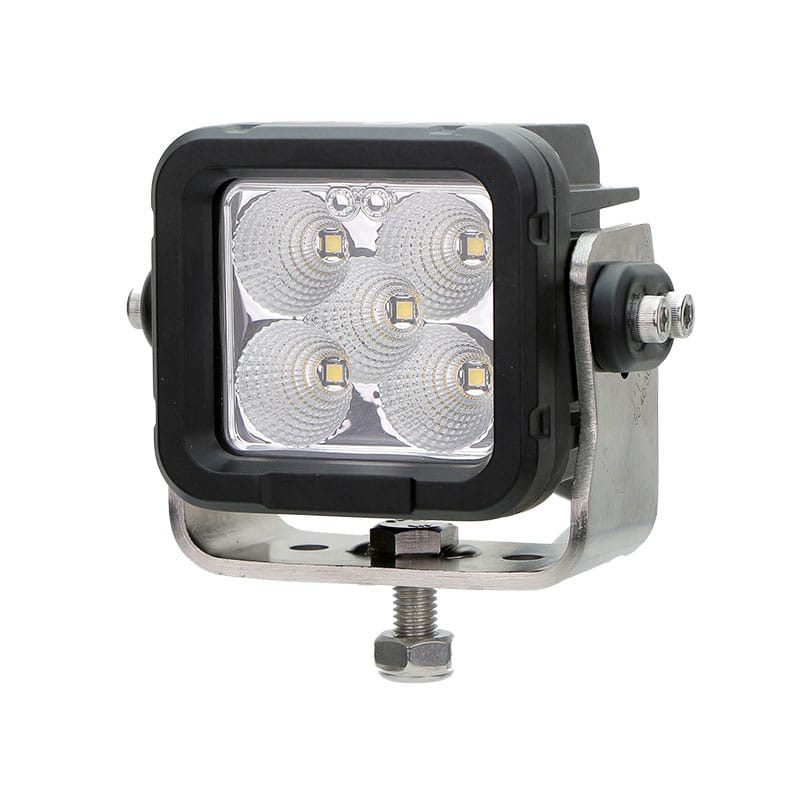
LED Work Lights are low-maintenance, not zero-maintenance. A few habits can extend life and keep light quality high:
- Clean lenses regularly: Mud and dust can cut usable light dramatically and increase glare.
- Check brackets and fasteners: Vibration slowly loosens everything—small checks prevent big failures.
- Inspect wiring: Look for cracked insulation, pinched harnesses, and corrosion in connectors.
- Address condensation early: Fogging can indicate sealing stress or temperature cycling issues.
If a light flickers or seems dim:
- Measure voltage at the light while it’s running (not just at the battery).
- Check ground connection quality and contact area.
- Inspect for voltage drop caused by long runs or thin wire.
- Confirm the switch and relay are rated for the current.
Working With a Supplier Who Understands Field Use
The difference between “a light that turns on” and “a light you trust every night” often comes down to design choices you can’t see at first glance—thermal paths, driver stability, sealing strategy, and bracket quality. That’s why it helps to work with a manufacturer who builds LED Work Lights for real environments and real equipment.
Ningbo Nova Technology Co,.ltd offers LED Work Lights developed for demanding vehicle and industrial applications, with a focus on consistent illumination, rugged construction, and practical options for different mounting and task needs. If you’re building a fleet standard, upgrading a machine, or sourcing for resale, having a knowledgeable partner can save you time, warranty headaches, and repeat labor.
FAQ
Q: Are higher-watt LED Work Lights always better?
A: Not necessarily. If the optics create glare or the housing can’t manage heat, more wattage can mean worse comfort and shorter lifespan. Match beam pattern and build quality to your job first.
Q: What beam should I choose for close-range work?
A: A controlled flood beam is usually best for close-range tasks because it spreads light evenly and reduces harsh hot spots.
Q: Why do my LED Work Lights flicker on heavy equipment?
A: Flicker is often caused by poor grounding, voltage drop from long or thin wiring, weak connectors, or unstable power. Check wiring and measure voltage at the light under load.
Q: Do LED Work Lights work well in fog, dust, or snow?
A: They can, but very cool color temperatures and poorly controlled beams can increase backscatter and glare. In those conditions, controlled beams and thoughtful aiming help a lot.
Q: How many LED Work Lights do I actually need?
A: Enough to eliminate shadows in your working zones without blinding you. Many operators get better results using multiple smaller lights aimed at specific areas rather than one extremely powerful light.
Next Steps
If you want LED Work Lights that match your equipment, working distance, and environment—without the trial-and-error—reach out to Ningbo Nova Technology Co,.ltd for practical guidance and product options tailored to your application. Tell us what you’re mounting on, where you need light, and what conditions you work in, and we’ll help you narrow it down fast—contact us to get started.